
Oman: The Gulf’s Quiet Alternative in an Age of Uncertainty
How stability, fiscal discipline, and quiet diplomacy are turning Oman into one of the Gulf’s most credible investment stories.

Summary
In a region often defined by volatility, shifting alliances, and high-stakes economic competition, Oman has emerged as something rare: a steady, understated alternative.
Following the 2017 Gulf crisis, which fractured relations between Qatar and several of its neighbours, the geopolitical map of the Gulf subtly but meaningfully shifted. While a few states pursued strong regional approaches, Oman chose neutrality, stability, and economic pragmatism.
Today, this choice starts paying ...
A Tradition of Neutrality as Strategy
Oman’s foreign policy has long been defined by quiet diplomacy. Rather than aligning aggressively with regional blocs, Muscat has positioned itself as a mediator, maintaining open channels with Iran, the United States, and its Gulf neighbours alike.
Oman provides investors and multinational companies with valuable predictability in the turbulent Gulf. Its balanced approach helps minimise exposure to political and economic disruptions.
Economic Strengths: Stability Over Spectacle
Oman has not tried to become a global headline-grabber as some of its peers in the region. Instead, it is building an economy based on structural resilience.
Key strengths include:
Strategic geography: Oman sits outside the Strait of Hormuz chokepoint, with direct access to the Indian Ocean. Ports like Duqm and Salalah are positioned to become major logistics hubs linking Asia, Africa, and the Middle East.
Logistics and infrastructure development: The Duqm Special Economic Zone is attracting manufacturing, energy, and shipping investments, offering an alternative to more congested Gulf hubs.
Economic diversification (Vision 2040): Oman is actively reducing its reliance on hydrocarbons by investing in tourism, logistics, mining, and renewable energy.
Fiscal reform and discipline: Recent years have seen improved public finances, driven by subsidy reforms, VAT introduction, and more cautious spending policies.
The “Low-Noise” Advantage
One of Oman’s most underrated strengths is what might be called its “low-noise” environment.
There are fewer abrupt regulatory shifts, less geopolitical signalling, and a more measured pace of reform. While this may appear less dynamic compared to its neighbours, it creates a business climate that is easier to navigate over the long run.
For companies fatigued by rapid policy swings or geopolitical exposure elsewhere in the region, Oman offers a compelling alternative.
The Early Signs of Payoff
The results of Oman’s strategy are no longer purely theoretical, they are beginning to show in the data.
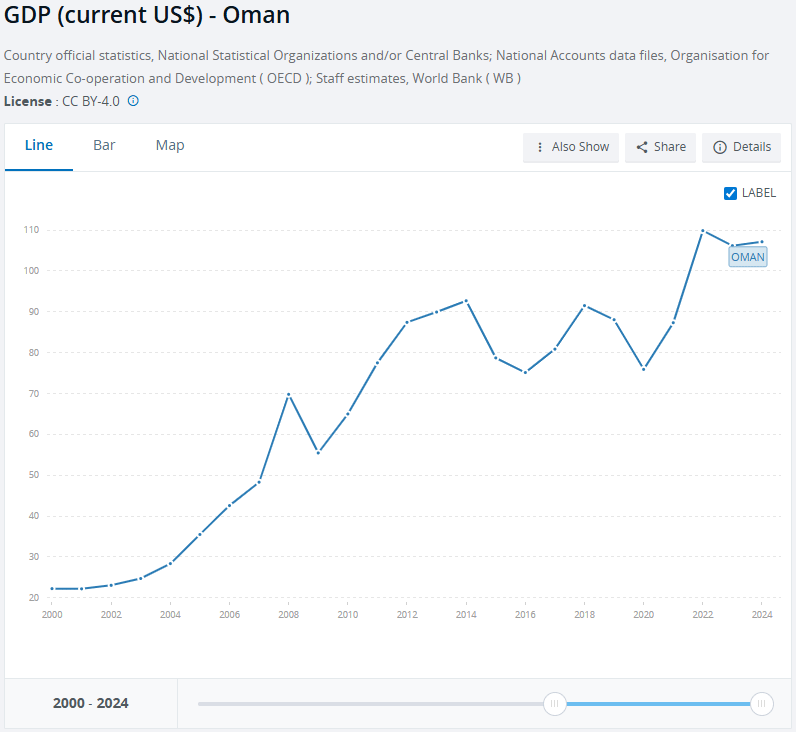
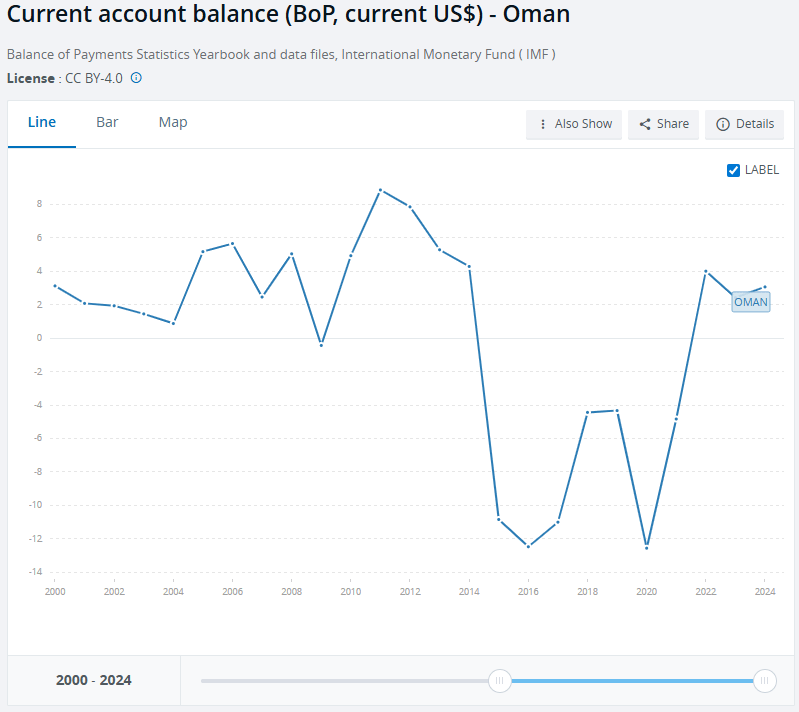
Growth has resumed, supported increasingly by non-oil sectors, while inflation has remained comparatively contained. The country’s fiscal position has improved markedly: budget deficits have narrowed, and public debt levels have begun to stabilise after years of expansion.
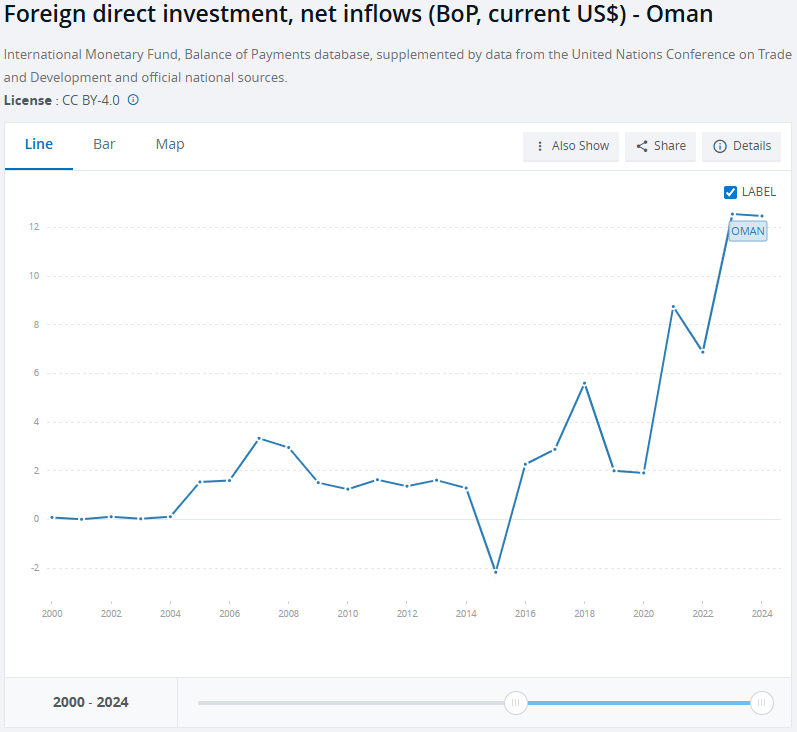
At the same time, foreign direct investment is picking up, particularly in logistics and energy infrastructure, signalling renewed external confidence. This shift has been reinforced by improving sovereign credit outlooks from agencies such as Moody’s, Fitch, and S&P, an important endorsement of Oman’s governing bodies.
Taken together, those indicators suggest the model is starting to work.
But Challenges Remain
As any emerging country, Oman’s model is not without its set of constraints.
Public debt remains relatively high.
Job creation for a young population is an ongoing challenge.
While growing, foreign direct investment, still lags behind regional leaders.
Moreover, Oman must balance its neutrality carefully in an increasingly polarised global environment.
A Different Kind of Gulf Story
Oman is unlikely to replicate the spectacle of Dubai or the scale of Saudi Arabia’s Vision 2030. But that is precisely the point.
Its value proposition lies elsewhere: stability over speed, balance over ambition, and reliability over hype.
Given current regional tensions, this may be more than an alternative, it could be an advantage.